
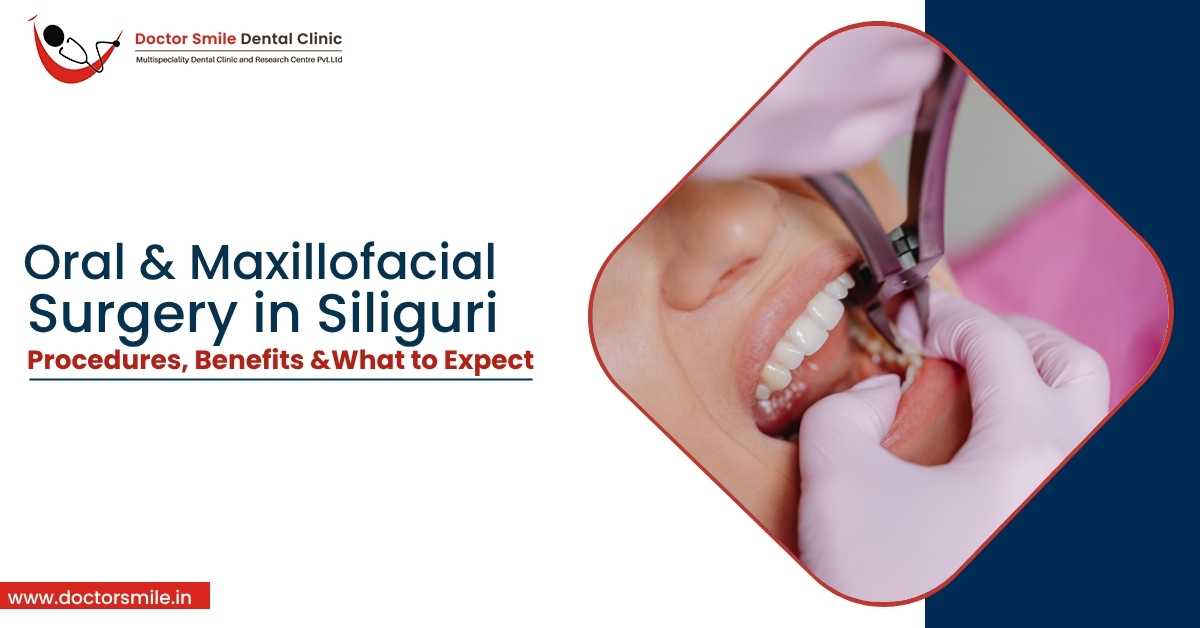

When you have a dental problem that requires more than routine treatment, you may be advised to see an oral and maxillofacial surgeon. Oral and maxillofacial surgery in Siliguri covers a range of procedures involving the teeth, jaws, mouth, and facial structures, from difficult wisdom tooth removal and dental implant surgery to treatment of jaw problems and facial injuries.
Also Read: Top 10 Reasons You May Need Oral and Maxillofacial Surgery in Siliguri
What is oral and maxillofacial surgery?
Oral and maxillofacial surgery is a specialty in dentistry concerned with the diagnosis and surgical treatment of conditions affecting the mouth, jaws, face, and related structures.According to the American Association of Oral and Maxillofacial Surgeons, they carry out procedures from tooth extraction and implant placement to corrective jaw surgery, facial trauma treatment, treatment of oral pathology, TMJ-related care, and reconstructive procedures. The American Board of Oral and Maxillofacial Surgery (ABOMS). The specialty also includes the diagnosis and treatment of diseases and defects affecting the functional and aesthetic aspects of the oral and maxillofacial region, including the mouth, jaws, face, head, and neck.
Common oral and maxillofacial surgery procedures might include:
Wisdom tooth removal:
Problems with wisdom teeth, such as impaction or poor eruption, can lead to pain, infection, gum problems, or damage to surrounding teeth. These can be surgically removed if they do not erupt properly. Wisdom tooth extraction is one of the common procedures performed by oral and maxillofacial surgeons.
Dental implant surgery:
Dental implants are an option for replacing missing teeth. Placement of the implant is done in the jaw, and after appropriate healing, a restoration can be attached. Oral and maxillofacial surgeons can be involved in implant placement, preparation of the site, and related procedures.
Corrective jaw surgery:
If the upper and lower jaws are significantly misaligned, orthodontic treatment may only provide partial correction. Corrective or orthognathic jaw surgery may be an option to treat certain skeletal imbalances. AAOMS indicates that corrective jaw surgery is a treatment option for addressing skeletal irregularities and may also benefit functions like chewing and breathing in appropriate patients.
Treatment of facial trauma:
Trauma to the jaw, facial bones, teeth, or soft tissues may require specialist treatment. Oral and maxillofacial surgeons are trained to address facial fractures and other injuries to the mouth and face.
Oral biopsy and treatment of oral lesions:
Persistent or suspicious changes in the mouth may need a biopsy to determine if it is abnormal. Oral and maxillofacial surgeons can diagnose and manage a range of pathological conditions affecting the oral and maxillofacial region.
TMJ and other jaw-related conditions:
The temporomandibular joints attach the jaw to the skull. Certain TMJ conditions can cause jaw pain and restricted movement. Depending on the diagnosis, treatment could be surgical or non-surgical. AAOMS includes both diagnosis and surgical and non-surgical management of TMJ disorders in the scope of oral and maxillofacial surgery.
Benefits of Oral and Maxillofacial Surgery:
The benefits of the procedure depend on the type of treatment and your individual case. Potential benefits could include:
- Removal of an impacted or problematic tooth
- Treating certain oral infections or pathological conditions
- Replacing missing teeth with dental implants
- Addressing certain jaw and facial abnormalities
- Improving oral function and structure.
You should remember that surgery is not always the most appropriate course of treatment for every patient. An oral and maxillofacial surgeon should first evaluate your condition and discuss whether surgery, non-surgical treatment, or something else is right for you.
What to expect before oral and maxillofacial surgery?
Before surgery, your surgeon will generally assess your symptoms, dental and medical history, and your condition requiring treatment. Depending on the procedure, diagnostic imaging or other examination may be required. For more complex procedures, treatment planning could involve detailed imaging and consultation with other dental specialists. For example, AAOMS explains that corrective jaw surgery may require orthodontic treatment, imaging, photographs, dental models, and computer-assisted surgical planning.
Your surgeon should also explain:
- Why the procedure is being recommended
- Available treatment alternatives
- Type of anesthesia or sedation
- Expected recovery period
- Possible risks and complications
- Follow-up requirements
What happened during the procedure?
The surgical procedure varies substantially depending on the treatment you are having. Simple oral surgical procedures are usually carried out with local anesthesia, while more complex procedures may require sedation or general anesthesia. Your surgeon will decide on the most appropriate approach for you. AAOMS notes that oral and maxillofacial surgeons are trained in a range of anesthesia techniques, including conscious sedation and general anesthesia/deep sedation. Your surgeon will use the planned surgical techniques to address your treatment needs, while trying to maintain or restore oral and facial function.
What to expect after surgery?
Some degree of discomfort, swelling, or stiffness can be expected after oral surgery. The duration and degree depend on the type of procedure. You can expect most swelling to be apparent around two to three days after oral surgery, while discomfort, jaw stiffness, and mild bruising can also be present.
These symptoms tend to clear up over the following one to two weeks. Your post-operative instructions might include:
- Taking any prescribed or recommended medication
- Maintaining appropriate oral hygiene
- Following any relevant dietary restrictions and eating softer foods temporarily
- Avoiding strenuous activity for the duration recommended by your surgeon
- Following instructions relating to smoking or tobacco
- Attending any required follow-up appointments
Recovery time varies significantly. A straightforward extraction might have a relatively short recovery, while procedures such as corrective jaw surgery can take a considerably longer healing time.
When should you consult an oral and maxillofacial surgeon?
You may be referred to or choose to consult an oral and maxillofacial surgeon for things like:
- Impacted wisdom teeth
- Difficult or complex tooth extractions
- Missing teeth that might need implants
- Misalignment of the jaws
- Facial or jaws injuries
- Certain oral lesions or pathological conditions
- TMJ-related problems
- Complex infections in the mouth or facial region
- Certain reconstructive or corrective procedures.
If you are experiencing persistent facial swelling, severe dental pain, Trouble opening your mouth, facial injury, unexplained oral lesions, or other concerning symptoms, it is best not to self-diagnose. Instead, seek professional dental or medical evaluation.
Final thoughts
If you are considering oral and maxillofacial surgery in Siliguri, understanding the procedure, benefits, preparation, and recovery can help you make an informed decision about your dental treatment. The right treatment depends on your individual condition, diagnosis, medical history, and surgical requirements. For patients who want specialist dental evaluation in Siliguri, you can consider Doctor Smile Dental Clinic for a consultation. Talk to a qualified dental professional about oral and maxillofacial surgery and whether it is right for you and what options are available.
Frequently Asked Question
When should you consult an oral and maxillofacial surgeon?
Some typical cases where you may need to see an oral and maxillofacial surgeon include impacted wisdom teeth, complicated extractions, dental implant surgery, jaw problems, facial injuries, oral lesions, and other indications of this medical specialty.
Is oral and maxillofacial surgery painful?
The surgery is generally performed under anesthesia or sedation, the type and level of which will be chosen by the doctor based on your indication. During the post-operative period, you may experience mild discomfort, especially if there were multiple tooth extractions to relieve the discomfort.
Is oral and maxillofacial surgery painful?
The surgery is generally performed under anesthesia or sedation, the type and level of which will be chosen by the doctor based on your infection. During the post -operative period, you may experience mild discomfort, especially if there were multiple tooth extractions; the doctor will prescribe spasmolytics and analgesics to relieve the discomfort.
How long is the recovery after oral and maxillofacial surgery?
It depends on the procedure; removing a wisdom tooth requires about a week for recovery. More complex operations may require months of rehabilitation. It is best to discuss the details with the doctor so he can give you a more accurate estimate based on your case.
Is extraction of a wisdom tooth an oral and maxillofacial surgery?
Yes, one of the common procedures performed by oral and maxillofacial surgeons is the removal of wisdom teeth- especially when they are complicated or in an atypical position.
What should you know for my first visit to an oral and maxillofacial surgeon?
At your first visit, the doctor will ask about your concerns, symptoms, and medical history, examine the affected area, and, if necessary, take an X-ray or other imaging tests. Then he will explain the details of the disease or condition, talk about the available methods of treatment, rehabilitation, and possible risks.
How do you choose a clinic for oral and maxillofacial surgery?
Find a qualified oral and maxillofacial surgeon, learn about the methods and equipment available at the clinic, ask about the infection control and safety protocols, and make sure you understand all details of the planned intervention.